Grow Something
有 4 件庫存
無法載入取貨服務供應情況
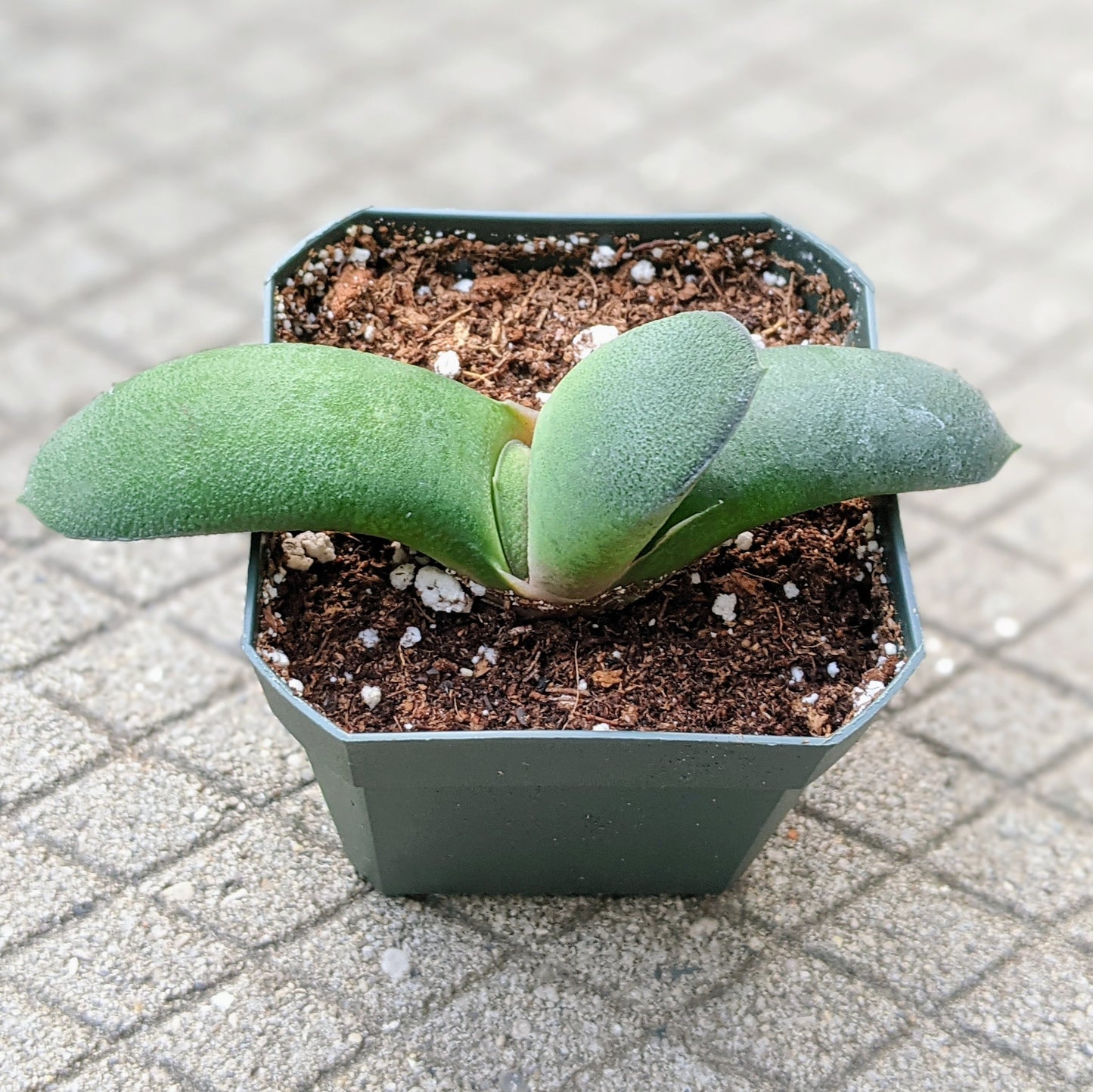
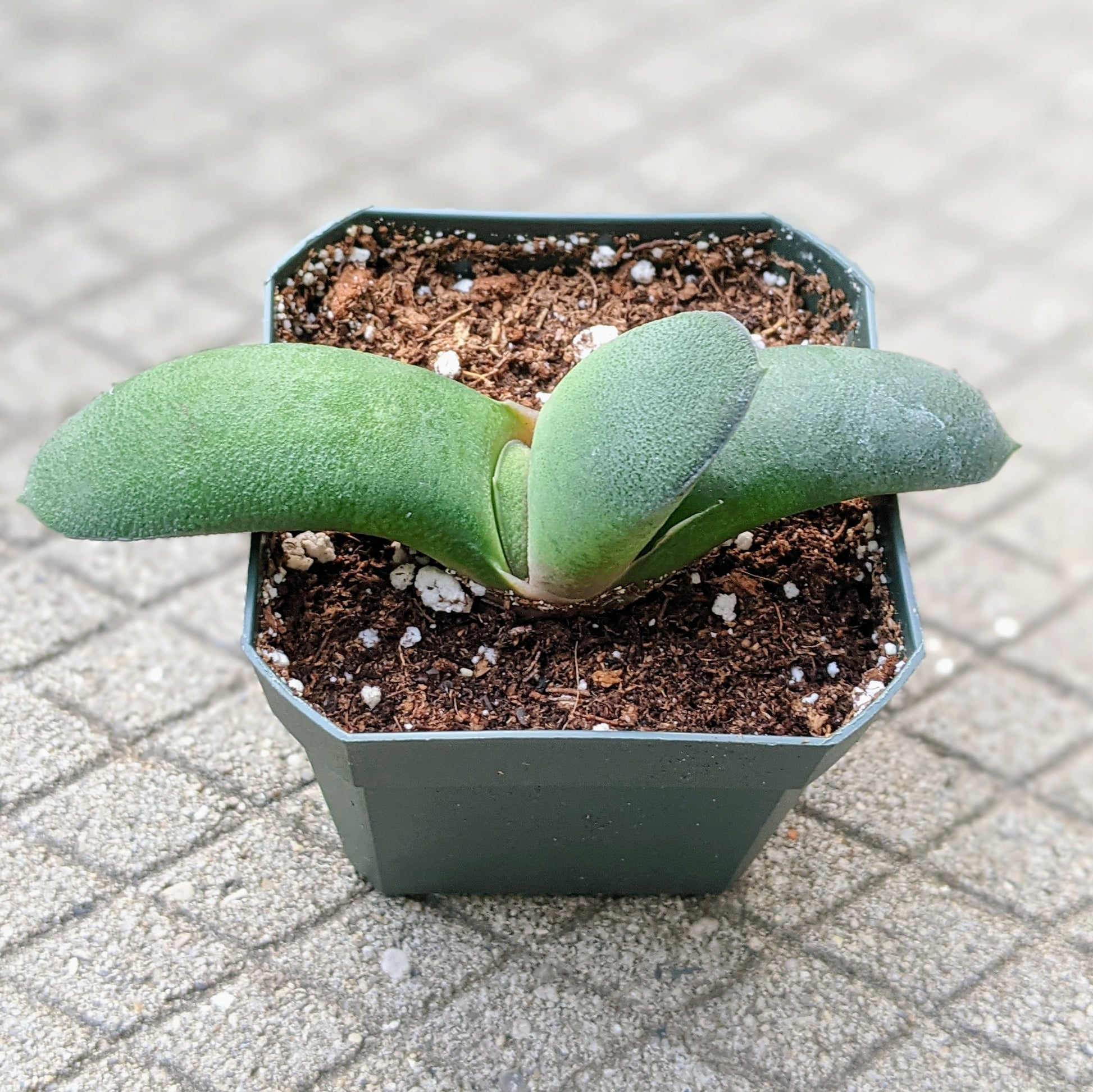
Gasteria Glomerata, commonly known as Kouga Gasteria, is a charming dwarf succulent native to the Eastern Cape of South Africa. It is prized for its compact growth habit and distinctive clusters of thick, fleshy, grey-green leaves. The short, tongue-shaped leaves have a slightly rough, textured surface covered in tiny raised bumps, giving the plant an unusual appearance.
This slow-growing succulent produces small rosettes arranged in two opposite rows, gradually forming dense, rounded clusters as it develops offsets from its base. In spring, it produces slender flower stalks bearing dangling, tubular reddish-pink flowers with characteristic swollen bases.
Naturally adapted to shady, rocky environments, Gasteria Glomerata thrives in bright indirect light to partial shade. It prefers a porous, well-draining growing medium and requires moderate watering, making it an excellent choice for small containers, shaded rock gardens, and succulent collections.
LIGHT | Bright indirect light to partial shade. Protect from intense afternoon sunlight.
COLD TOLERANCE | Not frost-hardy. Protect from freezing temperatures and prolonged cold.
WATER | Water thoroughly when the soil has dried. Reduce watering during cooler months and avoid leaving the roots sitting in water.
SOIL PH | Slightly acidic (approximately pH 6.4).
SOIL TYPE | Well-draining, gritty succulent mix. A combination of potting mix and pumice or perlite is recommended.
FERTILIZER | Apply diluted cactus or succulent fertilizer sparingly during active growth.
PROPAGATION METHODS | Offsets, leaf cuttings, and seeds.
HUMIDITY LEVEL | Low to average.
ACTIVE SEASON | Spring – Summer.
NOTE | Gasteria Glomerata is a naturally compact, slow-growing succulent that gradually forms dense clusters. Its grey-green leaves have a naturally rough, finely textured surface. Avoid overwatering, particularly during cooler weather.
INSTRUCTIONS FOR ROOTING CUTTINGS
For leaf propagation, remove a healthy leaf carefully and allow the cut end to dry and heal for at least three weeks. Place the base of the leaf in a well-draining, sandy growing medium. Keep it in bright shade and water sparingly. Rooting and the development of new plantlets may take several weeks or longer.