Grow Something
Bajas existencias: quedan 1
No se pudo cargar la disponibilidad de retiro
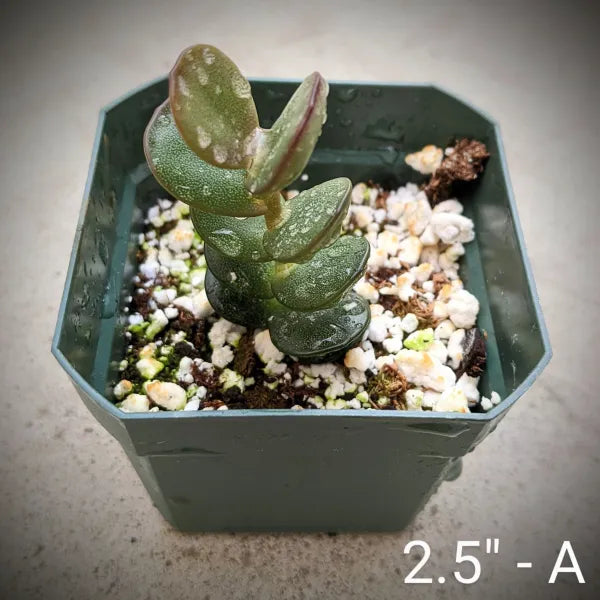
Adromischus subdistichus is a compact and eye-catching succulent known for its thick, irregularly shaped leaves and unique textured surface. The foliage ranges from soft green to grey-green, often accented with subtle spotting or a slightly rough, warty texture that gives each plant its own character.
This slow-growing species forms low clumps over time, making it perfect for small pots, windowsills, or succulent collections. Its sculptural form and muted tones pair beautifully with other succulents, adding contrast and interest to any arrangement.
Easy to care for and drought-tolerant, Adromischus subdistichus thrives in bright light and well-draining soil. With proper care, it may produce delicate, tubular flowers on tall stems, adding an extra layer of charm.
Ideal for both beginner and experienced growers looking for something a little more unusual.
LIGHT | Bright to light shade
COLD TOLERANCE | 5 ºC
WATER | Water moderately when when soil is dry.
SOIL PH | Acidic 5.6 - 6 or mildly acidic 6.1 - 6.5
SOIL TYPE | 50% potting mix 50% non organic material (pumice or perlite).
FERTILIZER | Fish emulsion, kelp solution, worm casting, shrimp compost.
PROPAGATION METHODS | Stem or leaf cuttings
HUMIDITY LEVEL | Low
ACTIVE SEASON | Autumn
NOTE | Don't ship well—leaves fall off easily.
How to Root Your Cutting
1. Prepare the Soil
Use a well-draining succulent mix (cactus soil with added perlite or pumice).
2. Plant the Cutting
Place the cut end gently into the soil, just enough to keep it stable. Avoid planting too deep.
3. Light
Keep in bright, indirect light. Avoid direct sun while roots are forming.
4. Watering
Wait a few days after planting before watering. Then water lightly, allowing the soil to dry out completely between waterings.
5. Rooting Time
Roots typically develop within 2–4 weeks.
6. Aftercare
Once rooted, gradually introduce more light and resume normal succulent care—bright light and infrequent watering.
💡 Important:
Avoid overwatering during this stage, as excess moisture can cause the cutting to rot.